


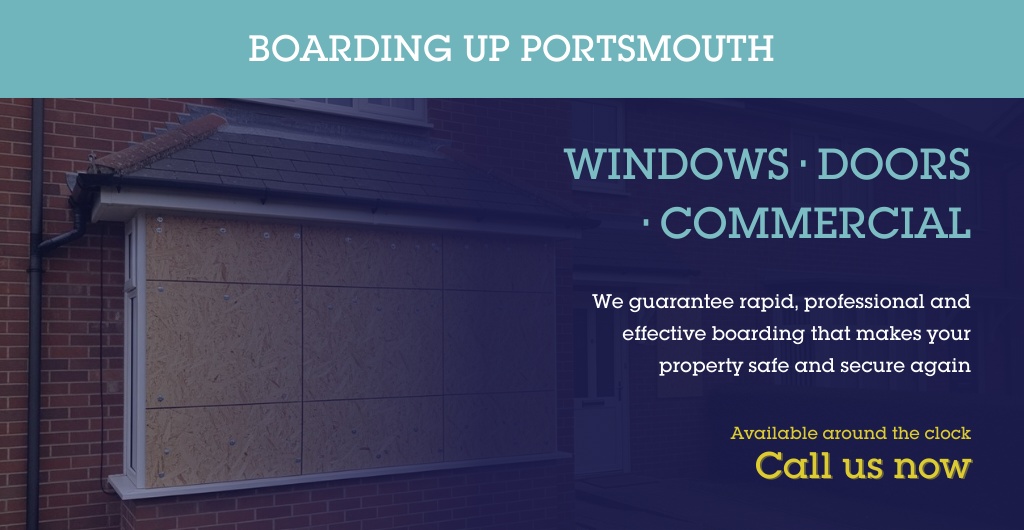
Boarding Up for Vacant Properties in Portsmouth (PO Postcodes)
A vacant or void property can go from “quiet” to vulnerable very quickly. An unsecured window, a damaged back door, or a loose rooflight is often all it takes for opportunistic entry, weather damage, or ongoing anti-social behaviour to start. If you’re responsible for an empty house, flat, shop unit, office, or building site accommodation in Portsmouth or the wider PO postcode area, boarding up is one of the simplest ways to secure the property and reduce further risk.
Boarding Up Portsmouth provides vacant property boarding across PO1–PO41. We’re fully insured, have DBS-checked technicians, and we’ve been trading for 10+ years. Whether you need emergency boarding up after a break-in, or planned temporary boarding between tenancies, we’ll talk you through the safest, most practical option and give you a realistic ETA on the phone.
If the property has already been accessed or damaged, go straight to our emergency boarding up page or call now: Call 023 8272 0371.
Why vacant properties need a different approach
A lived-in property usually has lights, noise, and daily activity—natural deterrents. A vacant property doesn’t. That changes what “good security” looks like.
With empty buildings, the goal is typically to:
- Deter repeated entry (not just “cover the hole” once)
- Prevent weather ingress that escalates repair costs
- Reduce the chance of vandalism and nuisance calls
- Create a clear, documentable “make safe” action for insurers, landlords, or asset managers
- Keep the site compliant with basic expectations around safety (e.g., preventing access through ground-floor openings)
We also understand that vacant properties are often managed remotely by landlords, agents, housing associations, probate executors, or facilities teams—so communication and documentation matter.
Typical vacant property scenarios we’re called out to in Portsmouth & the PO area
Vacant-property call-outs tend to fall into a few recognisable patterns. If any of these sound familiar, you’re in the right place.
1) Break-ins and repeated attempts to gain entry
Empty buildings are frequently targeted because there’s less chance of someone confronting an intruder. A first incident is often followed by a second if the property looks easy to access.
Common triggers include:
- A smashed window at the side or rear of the building
- A forced door, damaged frame, or missing lock
- Entry via a weak point like a small bathroom window or rooflight
In these situations, we often need to do more than just board up broken window openings—e.g., we’ll also review nearby vulnerable points and advise on upgrades like a temporary steel door where appropriate.
Related situations: burglary repairs and vandalism repair.
2) End-of-tenancy voids (planned securing between occupants)
Some voids are planned: a property becomes empty while it’s being sold, refurbished, or re-let. Here, boarding up can be used as temporary boarding during high-risk periods (for example, when glazing has been removed for replacement, or the building is awaiting trades).
If you’re an agent or landlord, this is often about reducing risk and avoiding delays—keeping the building secure while works continue.
3) Fire-affected properties that need securing (not cleanup)
After a fire, even if the main damage is internal, doors and windows may be compromised by heat, smoke service entry, or forced access. We’re often called to make safe once the emergency response is complete.
Important limitation: we don’t provide smoke/odour remediation or full fire restoration, but we do secure openings so the building can be assessed and repaired properly. See fire damage.
4) Storm and impact damage that leaves openings exposed
High winds, flying debris, or impact can break glazing and expose the interior to rain. In a vacant building, water ingress can go unnoticed for days—leading to swollen timber frames, damaged electrics, and mould.
If you need to secure property quickly after weather damage, see storm damage or, for vehicle strikes and similar incidents, accident damage.
5) “Open and accessible” hazards (unsafe doors/windows)
Sometimes the problem isn’t a dramatic break—it’s an insecure opening:
- A door that won’t latch
- A window that no longer closes
- Rot, warping, or frame movement that creates a gap
On vacant properties, those small issues become a big risk because they broadcast that the building is unprotected.
What “boarding up” means for vacant properties (and why method matters)
Not all boarding is equal. For vacant properties, the right method depends on how long the building will be empty, the level of risk, and the condition of the frames.
Plywood vs OSB: choosing the right board
We commonly use:
- 18mm exterior-grade plywood for stronger, longer-lasting protection (especially for ground-floor windows, doors, and larger openings)
- 12mm OSB for smaller or lower-risk openings where suitable
We’ll advise what’s appropriate for the specific opening. For example, a large commercial pane or a frequently targeted frontage usually benefits from thicker, more robust boarding.
Fixing methods: security first, but avoid unnecessary damage
Where possible, we use non-destructive or low-impact fixing methods—especially important if you’re planning to reinstate windows/doors quickly. That said, if frames are already damaged, we’ll explain the options before proceeding.
Common approaches include:
- Anti-tamper fixings to reduce the chance of boards being removed from outside (important for unattended properties)
- Internal bracing where access and frame condition allow
- Overlapping boards and correct edge support to reduce pry points
If the frame is too weak to hold fixings safely, we’ll tell you that upfront and suggest alternatives.
Temporary steel doors: when a boarded door isn’t enough
For vacant buildings with a compromised entry door—or where repeated entry is likely—a temporary steel door can be a better medium-term solution than boarding alone. It’s designed to withstand attack and allow controlled access for authorised visits.
Learn more about door boarding in Portsmouth (including temporary steel door options).
Security screens for longer void periods
For some vacant properties—particularly those awaiting probate, long refurb timelines, or repeated break-ins—steel security screens can be more practical than repeated re-boarding. If that’s the case, we’ll discuss it based on your risk level and budget.
How we secure a vacant property: what to expect
When you contact us about a vacant building, we aim to keep things straightforward and transparent.
-
Call and tell us what’s happened
Let us know the property type (house, flat block, shop unit, office), how it’s currently unsecured, and whether there’s been forced entry. If you have photos, they can help. -
We give you a realistic ETA
We don’t promise fixed arrival times—conditions vary—but we prioritise urgent jobs and will tell you what’s realistic at the time of your call. -
On-site assessment and “make safe” plan
We check the opening(s), the stability of the surrounding frame, and whether there are additional vulnerable points that should be addressed while we’re there. -
Boarding / securing works carried out
We install appropriate boarding and fixings, with attention to preventing easy removal and reducing weather ingress. -
Documentation for your records or insurer
For vacant properties, paperwork matters. We can provide:
- Time-stamped photos
- A clear work statement describing what was secured and how
- An itemised invoice suitable for insurers or internal accounting
For claims guidance, see insurance claims support.
Methods by opening type (vacant property focus)
Different parts of a building fail in different ways. Here’s how we usually approach each opening type on vacant properties.
Boarding up windows (ground floor and accessible elevations)
A single broken pane can turn into repeated entry attempts. Our window boarding work focuses on strength and removal resistance where required.
See: window boarding in Portsmouth.
Boarding up doors and unstable entrances
If the door is kicked in or the frame is split, the priority is to restore a secure boundary quickly. Depending on damage, we may recommend boarding, a temporary steel door, or additional reinforcement.
See: door boarding in Portsmouth.
Shopfronts and commercial glazing on empty units
Empty retail units can attract attention, and large panes can be expensive to replace. Boarding a shopfront is about safe handling, larger sheets, and proper fixing—often out of hours after an incident.
See: shopfront boarding.
Rooflights, skylights, and overhead vulnerabilities
Vacant buildings are sometimes accessed from above, or a storm may compromise a roof opening. Roof-level work needs careful access planning and weatherproofing.
See: roof boarding.
Practical tips for landlords, agents, and facilities managers managing voids
If you’re responsible for multiple properties or a single high-risk void, these steps help reduce repeat problems:
- Inspect quickly after storms: small breaks become big leaks in an empty building.
- Don’t leave “temporary” gaps unattended: even a small opening can invite entry.
- Keep a record of incidents: dates, photos, and police reference numbers if relevant.
- Tell your insurer early: policies can have conditions around vacant periods.
- Plan access: if we need internal access for bracing, arrange keys or a site contact.
If you’re not sure what’s required, start with a call—sometimes a short conversation prevents unnecessary work.
Frequently asked questions: vacant property boarding in Portsmouth
How quickly can you secure a vacant property in the PO area?
We prioritise urgent jobs and aim to attend as quickly as possible, but we don’t guarantee fixed response times. When you call, we’ll give you a realistic ETA based on workload, time of day, and your location within PO1–PO41.
If it’s urgent right now, use emergency boarding up and call 023 8272 0371.
Can you board up a property that’s already been boarded badly?
Yes—this is common. We often see boards fixed with inadequate screws, poor edge support, or gaps that allow prising. We’ll assess what’s there, remove or improve it where practical, and upgrade the fixing method to better deter removal.
Will boarding up damage the frames or brickwork?
It can, depending on the fixing method and the condition of the surrounding material. We aim to use the least destructive approach that still provides proper security. If the frame is rotten, cracked, or too weak, we’ll explain the options before proceeding.
Do you offer medium-term solutions for long void periods?
Yes. If a property will be empty for weeks or months, we can discuss stronger options such as temporary steel doors or security screens, depending on risk level and access needs. The right choice often depends on whether authorised visits are required (inspections, trades, viewings).
Can you work with housing associations, estate agents, or facilities management teams?
Yes. Vacant property work often involves third-party coordination, clear documentation, and consistent methods across multiple sites. We can provide photos, work statements, and invoices suitable for internal approval and insurance processes.
Is boarding up covered by insurance for vacant properties?
Sometimes—cover varies by policy and by the circumstances (burglary, storm, impact, etc.). We’re not loss adjusters, but we provide documentation insurers typically ask for. See our guidance on insurance claims support.
What if the property has been vandalised but nothing is “broken” yet?
If there are signs of attempted entry, it’s worth securing vulnerable points before damage escalates—especially on ground-floor windows, side doors, and weak rear access points. If you’re unsure, call and describe what you can see; we’ll advise whether boarding or another solution is appropriate.
Coverage: vacant property boarding across PO1–PO41
We provide boarding up for vacant and void properties across Portsmouth and the wider PO area, including city districts and surrounding towns and villages. If you manage properties in multiple locations, we can help you standardise the approach and paperwork.
For local coverage examples, see:
You can also browse the full list of areas we cover.
Ready to secure a vacant property?
If you need to board up a smashed window, board up a door, or make safe an empty property after a break-in or storm damage, we can help.
Ready to get started? Call 023 8272 0371 or email us with the address and a brief description for a fast, no-obligation quote.
